The first time I staged a “fun zone” with inflatables, I underestimated two things: how fast a hundred kids can cycle through a bounce house, and how quickly an event loses energy when the layout bottlenecks. By noon, the water slide line wrapped past the snack booth, the toddlers were getting bumped by bigger kids near the entrance, and I had power cords crossing a walkway. We fixed it by mid-afternoon, but that morning taught me the shapes of a successful inflatable plan. The gear matters, but the plan is what turns inflatable rentals into a full-day experience rather than three frantic hours followed by meltdowns and muddy socks.
This guide distills the hard-earned lessons from town festivals, school carnivals, church picnics, company family days, and plenty of backyard birthdays. It covers equipment choices, footprint planning, staffing, safety, power and water reality, and how to keep the crowd flowing all day. Whether you’re lining up kids party rentals for a single backyard or setting a field for two thousand people, the same principles apply.
Start with your crowd
If you only remember one planning question, make it this: who are you serving at peak time? Not an average across the day, but the hour when the bounce loop is busiest. A corporate picnic might see a late surge after the barbecue ends. A school carnival surges as soon as the gates open. A neighborhood birthday party bounce house might run steady from 10 to 2, then tail off.
Ages drive your mix. Toddlers need their own space and slower features. Early elementary kids will run obstacle loops until they collapse. Tweens want excitement and a bit of competition. Teens still jump, but they are more picky about themes and will gravitate toward bigger, steeper inflatable slide rentals and sports challenges. Themed bounce house rentals help with younger kids and photo appeal. Combo bounce house rentals, which blend a standard jumping area with a small climb and slide, stretch attention spans and reduce turnover friction.
Headcount matters as much. Assume a safe occupancy of 6 to 10 kids in a standard bounce house at once, depending on size. Turnover times vary by your rules and throughput. A skilled attendant who keeps sets short, clears the exit quickly, and balances age groups can move 100 to 200 kids per hour through a single unit. If you expect 300 children in a two-hour window, one bounce house is not enough. You’ll need multiple party inflatables that distribute interest: perhaps a bounce castle, an inflatable obstacle course, and a mid-height slide. Building redundancy prevents a single line from killing the vibe.
Choosing the right mixes: bounce, slide, and wow
A fun zone benefits from a triangle of attractions. One should feel classic and easy, one should be a loop or race, and one should be a visual anchor with height or water. With those three angles, you can capture different energy levels and age groups.
Bounce houses make the entry point. For a backyard birthday, one bounce house plus a small slide might feel perfect. In a larger setting, pick complimentary shapes: a castle or tropical theme for younger kids, a sports or superhero skin for school-age, and a neutral primary-color unit for mixed crowds. Themed bounce house rentals draw kids in, and parents like pictures that match a party look. If space is tight or power is limited, a single combo bounce house rental may replace two separate units while offering more varied play.
Slides add throughput. Inflatable slide rentals have clear start and finish points, which helps staff move lines. Dry slides work almost anywhere and avoid the cleanup curve of water. Water slide rentals, though, transform hot days. They also take real planning. You need a reliable water source, drainage, and a policy for riders. Put the water piece at the far end of your layout, downhill if you can, and bring extra towels. If you expect temperatures over 85 degrees, the water line will be your longest line. A second water feature like a slip-and-slide lane can relieve the pressure without doubling the footprint.
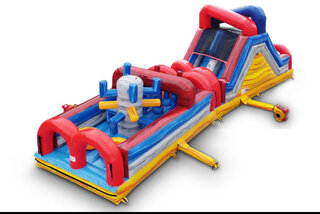
Inflatable obstacle courses are the secret weapon. They handle head-to-head races, drive repeat runs, and flatten age differences. A 30 to 40-foot course works for elementary age. For older kids and teens, look at 50 to 70 feet with taller climbs and longer crawls. Some have interchangeable modules, a nice trick if you want to adjust difficulty between morning and afternoon crowds. Obstacle flows are efficient, often pushing through 200 to 300 participants an hour when staffed well. For events chasing fundraising goals or ticket sales, that matters.
Toddler bounce house rentals deserve their own paragraph. The toddler zone should feel like its own mini-event. Keep them inside a gated area, use low-platform inflatables, and add soft play items or a small ball pool if your party equipment rentals provider carries them. A toddler unit often lives happily in gymnasiums for indoor bounce house rentals, especially during colder months when parks and fields are off-limits. The difference in energy between toddlers and older kids is significant. If they share one big bouncer, you’ll spend your day refereeing collisions.
Layout that prevents bottlenecks
I sketch layouts on paper, then map them onto the actual site with cones and tape on setup day. The geometry of a fun zone is simple: keep party rentals lines out of walkways, create clear entry points, and separate landing zones from queuing zones.
Think of each inflatable as having four areas. You need a queue, an entry gate, the active play area, and the exit path. Give the queue at least 10 to 15 feet of width for popular pieces. Angle queues away from food and restrooms to reduce clutter. Wherever you expect the longest line, create an intentional snake with stanchions or rope so parents aren’t improvising.
Slides and obstacle courses spit out kids fast. Protect the exit. Two mats, a clear 8 to 10-foot buffer, and a volunteer guiding riders to rejoin the back of the line will prevent pileups. If you can, position exits to the side or rear so kids don’t run across incoming lines.
Water complicates all of this. Keep wet traffic off dry inflatables to avoid slipperiness. Hose runoff away from generators. Store shoes in cheap plastic bins to keep the queue tidy. If your site slopes, orient water slides across the slope rather than down it to prevent muddy rivers.
For large fields, zone by age. Place toddler inflatables near shade and rest, with a fence or barricade. Put the big visual anchors deeper in the field to pull crowds inward. If you have carnival booths or games, wrap them around the inflatables to distribute traffic, but avoid creating a continuous ring that traps lines.
In gyms and halls, ceiling height dictates choices. Ask your provider for true vertical measurements. A unit that says 15 feet tall often needs a few extra inches for safe clearance and the blower tube. Indoor bounce house rentals benefit from noise planning too. Blowers in echoey spaces make conversation tiring. Aim blowers toward corners, and use rubber mats under them to reduce vibration.
The staffing equation that keeps it fun
I’ve watched beautiful inflatable setups collapse when there’s no one to run the lanes. A single attentive attendant per unit changes the experience. They set rider limits, spot rough play early, keep the line moving, and communicate downtime. If budget is tight, ask your event entertainment rentals company if they can train volunteers to monitor units. Clarify whether their insurance requires company staff on certain pieces, especially tall slides and water features.
Good staffing means defining roles before gates open. A starter at the front of the line, a spotter at the entrance, and a catch at the exit is ideal on high-throughput units like obstacle courses. For standard bounce houses, one attendant who manages entry and keeps a clock works well. Set short sessions. Ninety seconds to two minutes per group sounds short, but it feels long inside a bouncer and preserves fairness.
If you need to give out wristbands or tickets, place that step away from the unit lines. A check-in table near the zone entrance prevents the “pay at the front of the slide” bottleneck. For community events, consider a quiet hour. Turning off music, dimming bright lights, and softening rules for sensory needs can make a big difference for families who otherwise skip busy inflatables.
Safety and weather: the non-negotiables
Every company talks safety, but details matter. Ask to see inspection tags and insurance certificates. Confirm stakes or ballast weights suitable for your surface. On grass, 18 to 36-inch stakes with hammer-in caps are standard. On pavement, you should see water barrels or concrete blocks plus straps rated for load. Check that operators carry tethers and ground tarps, and that they require a clear perimeter free of sharp edges and overhead branches.
Wind is the silent showstopper. The commonly cited guideline is to deflate at sustained winds around 20 to 25 miles per hour, lower for tall slides. Your provider should give you a wind policy, but you need your own backup plan. Place alternate activities nearby, like yard games or craft tables, so you can pivot without losing the day. Light rain is usually fine for dry units, but watch for slick vinyl. Heavy rain, plus wind, equals downtime. Build a communication plan with parents. A small whiteboard or a simple sign at each unit helps.
Footwear and eyewear rules seem obvious until you have a pile of flip-flops and sunglasses at a slide base. Provide shoe bins and a lost-and-found tote. Train staff to stop kids wearing hard plastic hair accessories or jewelry before they enter. If you’re operating water slides, water shoes are okay if soles are soft and clean.
The rare but real risk involves power loss. If a blower trips a breaker, attendants must clear the unit fast. I’ve timed crews who practice this, and it shows. Ask your provider to run a quick safety briefing with your volunteers before opening. It takes five minutes and sets a serious tone.
Power, generators, and the curse of the wrong circuit
This is the part that gets glossed over and causes the most calls on event day. An average blower pulls 7 to 12 amps at 120 volts. Big slides or obstacle sections may need two blowers, or a 2-horsepower unit that draws higher amperage at startup. Household circuits often run 15 amps and share with lighting, fridges, or sound systems. Add them all together and you can trip with one big inhale.
Your event entertainment rentals provider should supply exact power needs. Chart every unit and blower count. Use individual circuits wherever possible. If you are pulling from a building, test outlets the day before with a load and label each run. Long extension cords create voltage drop, especially if they are thin. Use 12-gauge cords for longer runs, keep cable lengths as short as the site allows, and never daisy-chain power strips to feed blowers.
For fields and parking lots, generators are usually simplest. Quiet inverter generators reduce noise and fuel use, but make sure their rating matches startup draw. One 3500 to 7000-watt unit can often handle a medium inflatable, sometimes two smaller ones, but confirm with your provider. Stage generators downwind of the crowd, on level ground, with cord covers across walkways.
Water adds another layer. If you are using water slide rentals, you need a hose long enough to reach without tripping hazards, a reliable spigot, and confidence that runoff won’t swamp your power area. Position blowers and cords uphill from the splash zone. Keep GFCI protection in the power chain. I carry spare GFCI adapters and splitters because the $30 part can save a $3,000 day.
Designing for attention span: how to keep it fresh all day
Kids cycle through novelty. The trick water slide bounce house rental is to give them reasons to come back without overcomplicating the schedule. I like to rotate small rules rather than equipment. Before lunch, run the obstacle course as head-to-head races. After lunch, switch to timed solo runs with a simple leaderboard. For the bounce house, limit jumpers by age in the first hour to let shy younger kids warm up. Later, relax into mixed groups once the crowd understands the etiquette.
If your event runs six to eight hours, plan 10-minute rest breaks every 90 minutes per unit. Use them to check anchor points, clear debris, and reset lines. Post the break schedule so people know you are caring for safety, not disappearing. Staff morale stays higher when they get a short breather, and the units last longer without mystery scuffs or tears.
Offer small extras that stretch engagement without slowing lines. A box of foam batons near the obstacle course invites playful duels that still fit the flow. A bubble machine near the toddler area buys you another hour of happy toddlers. Music matters too. Upbeat, family-friendly playlists keep the field lively. Avoid a speaker right next to a blower. A bit of space makes a big difference in how pleasant the zone feels.
Indoors vs outdoors: seasonal strategies
Indoor bounce house rentals shine for winter birthdays and school events. The pros: no wind, no sun, reliable power, and easier containment. The trade-offs: ceiling limits, noise, and floor protection. Lay tarps and carpet squares to prevent scuffs. Tape doorways before load-in. Confirm insurance requirements with the venue, especially for gyms and church halls. Fire exits must remain clear, which may dictate unit orientation.
Outdoors gives you volume and spectacle. A tall inflatable bounce castle catches eyes from the parking lot. Grass is forgiving, but soggy fields can shut you down. Asphalt supports heavy foot traffic, but tie-downs rely on ballast rather than stakes. When you can, walk the space a week ahead to spot sprinklers, slope, and shade. Sometimes an extra easy-up tent for shade near the toddler zone is worth more than another inflatable.
Budgeting and value: where the money really goes
Inflatable rentals vary by market and season. A standard bounce house might run 150 to 300 dollars for a day. Mid-size combo units can land around 250 to 450. Slides and long inflatable obstacle courses often range from 400 to over 1,200 depending on height and length. Water features command a premium during hot months. Delivery distance, setup complexity, and staffing add to the total.
Where do you get the most value? For small birthdays, a combo bounce house rental often beats separate bounce and slide units, saving power and space. For school carnivals and festivals, one long obstacle course paired with a medium slide spreads lines and gives you a strong anchor. Themed bounce house rentals are worth it when you want marketing impact or a photo-friendly centerpiece. If your event is a fundraiser, think in terms of throughput per dollar. Obstacle courses and slides typically move more people per hour than a single bounce house, which helps with ticketed models.
Don’t forget small costs: extra cords, mats, fuel for generators, shade structures, wristbands, and signage. Skimping on those can cost more in headaches than you save.
Working with a rental provider like a partner
Treat your event entertainment rentals company as part of the planning team. Share your crowd numbers, age splits, site photos, and schedule. Ask for their recommended layouts. The good ones have solved your kind of problem before and can often suggest a different unit that fits your space better. If you have narrow gates or stairs, tell them early. A 400-pound roller and a 36-inch gate can ruin a morning if no one checked.
Clarify delivery and pickup windows, especially for venues with tight access times. Get the name and phone number of the crew lead. Confirm rain and wind policies in writing. If the forecast looks marginal, ask about swap options, like trading a water slide for a dry slide the day before. Companies with larger inventories can be flexible if you give them a little warning.
For all-day events, consider staggered setups. Put the early-opening units in first, then roll in the headliner a bit later when lines would otherwise spike. It gives you a fresh reveal and buys time if weather or traffic delays the second truck.
Small details that separate a good zone from a great one
The best fun zones feel cared for. I walk with a pocketful of zip ties and a roll of painter’s tape. Loose cords get bundled. Signs get a second piece of tape at the bottom so they don’t flap. Shoe bins go where kids naturally step out of line, not where I wish they would. A broom next to each unit makes it easy to clear pebbles and grass before they turn into vinyl scuffs.
Clear rules keep smiles. Post simple guidance at each attraction: age ranges, capacity, behavior, and the no list. Write them as friendly cues rather than commands. An attendant’s voice matters too. Coaching rather than scolding builds compliance. If a child is too big for the toddler unit, offer a VIP turn on the big slide. Positive redirection ends better than prohibition.
Photography happens. Place a small sign encouraging parents to step to the left or right after snapping a picture, so they don’t block exits. If you have a photo-spot banner that matches your theme, set it where it doesn’t crowd lines. People love a backdrop, but it should be an accessory, not a choke point.
A sample full-day plan, scaled for 300 to 500 attendees
You can adapt this skeleton to your own numbers. The goal is to maintain energy, prevent lines from collapsing the experience, and make space for safety checks without drama.
- Mix of units: one 13x13 classic bounce house near the entrance for quick wins; one 30 to 40-foot inflatable obstacle course centered with generous queuing; one 18 to 20-foot dry slide or a 15 to 18-foot water slide if heat demands; a fenced toddler bounce house rental with soft play add-ons. Power plan: one dedicated circuit or small inverter generator per blower; 12-gauge cords under cable covers across traffic; GFCI in the chain; blower placement downwind of crowds. Staffing: one trained attendant per unit; a floating supervisor to cover breaks and handle parent questions; volunteers at peak hours to run starters and exit guides on the obstacle and slide. Schedule: open with staggered starts over 15 minutes to avoid a first-line stampede; announce short rest checks at 90 and 180 minutes; introduce a timed race hour after lunch; designate a 45-minute quiet hour mid-afternoon; keep water features running last if heat persists. Contingencies: shade and water stations near toddler zone; simple craft table ready if wind shuts down tall units; extra towels and shoe bins near the water slide; portable PA or chalkboard for quick updates.
This plan shifts pressure between attractions, keeps throughput high, and sets a rhythm that families can feel. People will linger, eat on-site, and come back for one more run.
When it’s a backyard birthday
Smaller scale doesn’t mean less planning, just fewer moving parts. A birthday party bounce house or a compact combo unit does a lot of heavy lifting. Keep the entrance visible from the patio so adults can watch while they chat. Use painter’s tape to mark a kid shoe zone. If you add a small water slide, put it at the edge of the yard with a plastic runner to protect grass and steer runoff. Set a timer on your phone for rotations if the guest list is long relative to the unit size. A simple rule like “five kids for two minutes” keeps the birthday child from feeling like a doorman.
If space and budget allow, mix one inflatable with one non-inflatable station. A shaded table with building blocks, a bubble area, or a small sprinkler pad buys you variety. Keep snacks away from inflatables. Nothing fouls vinyl like crushed chips and frosting.
Common pitfalls and how to avoid them
Underpowered circuits cause most mid-event headaches. Handle power as a distinct planning item, not an afterthought. Confirm circuits, test, and bring backup.
Too few staff turns lines into chaos. If your provider can’t staff every unit, recruit volunteers and train them. Ten minutes of guidance before the event prevents hours of frustration.
No weather plan risks a quiet cancellation or a messy scramble. Even a simple printed sign that says “Units paused due to wind, crafts open under the red tent” keeps families with you rather than heading to the parking lot.
Over-theming at the expense of function can backfire. Themed bounce house rentals are great, but make sure the theme doesn’t reduce usable space or introduce narrow entries that slow lines. Kids will forgive a generic color scheme faster than a long wait.
Ignoring the toddler zone creates conflict. Give the littlest ones something of their own. Parents will thank you, and older kids will spend more time on age-appropriate thrill pieces instead of bouncing with three-year-olds.
Sourcing smarter: what to ask before you book
When you call rental companies, treat it like hiring a contractor. Ask how often they rotate inventory. Vinyl ages, and fresh surfaces mean fewer slow leaks and less downtime. Ask about cleaning processes and how they handle units between water and dry events. Inquire about backup blowers and field repair kits. A crew that can swap a blower in two minutes and patch a small seam on-site will save your schedule.
Request full dimensions, including blower placement and tie-down spread, not just the footprint. Measure your gates and paths. If you’re on a rooftop or elevated deck, discuss load limits and access points well in advance. For indoor bounce house rentals, confirm they have neoprene or non-marking dollies.
Finally, talk about insurance and permits. Some municipalities require permits for inflatables in public parks. Your provider usually knows the local rules. If they don’t, verify with your parks department before you advertise a water slide in a city space.
Turning inflatables into an experience
The gear looks like the story, but people remember how it felt to be there. They remember an attendant who cheered a nervous child down a slide. They remember how easy it was to find the right line and how the zone seemed to absorb a crowd without friction. They remember the sound of kids counting down races on the inflatable obstacle course and the way time slipped by because there was always one more thing to try.
With a thoughtful mix of bounce, slide, and wow, a clean layout, real attention to staffing and safety, and a plan for power and weather, inflatable rentals become more than party equipment rentals. They become the framework for a full day of movement, laughter, and shared stories. And if you get the details right, you end the day with grass on your shoes and a quiet field, not a pile of problems. That, to me, is the mark of a good event: everything that matters was invisible when it needed to be, and everything that should be remembered rose a little above the rooftops.